
Appreciate the Detail
As an example of a medieval parish church ruin in Ireland, Killoo has great national and architectural significance. Despite its incomplete state, the church retains features which are typical of medieval churches, and which tell us much about life at the beginning of the second Christian millennium.
THE CHURCH STRUCTURE
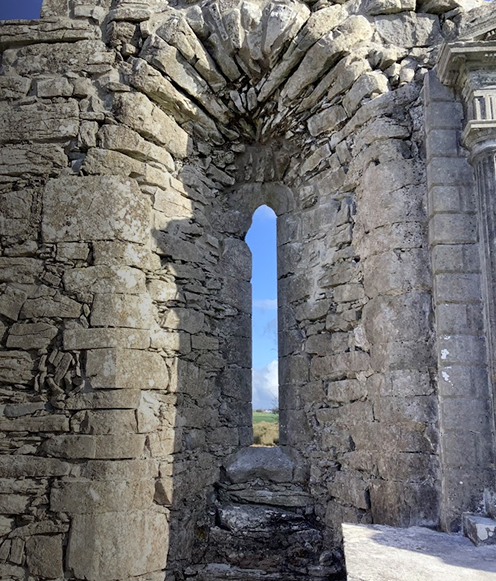
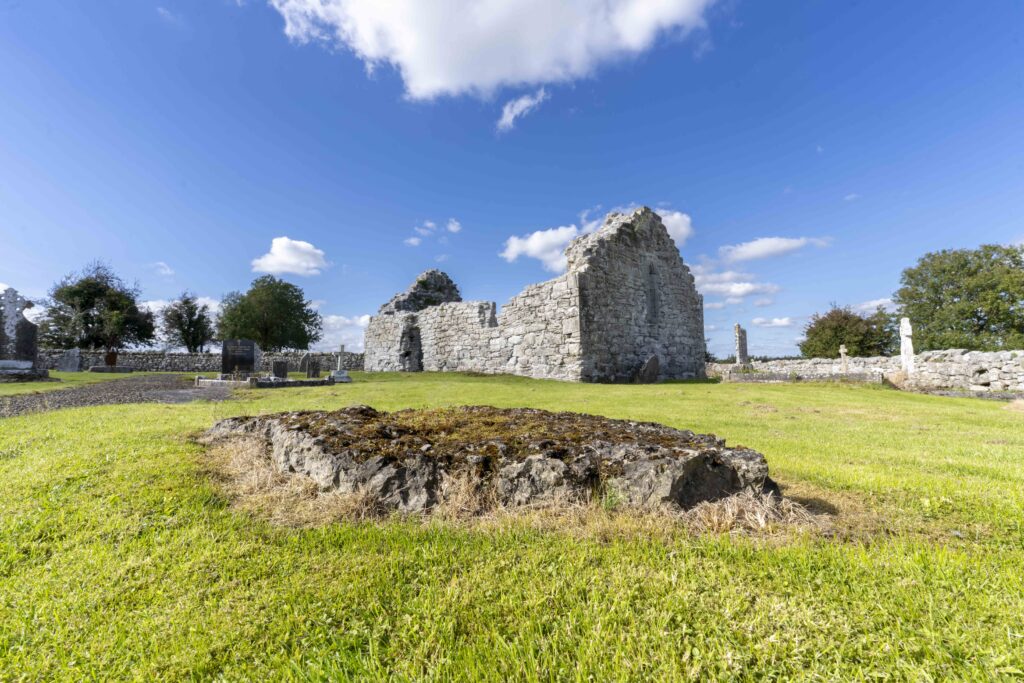
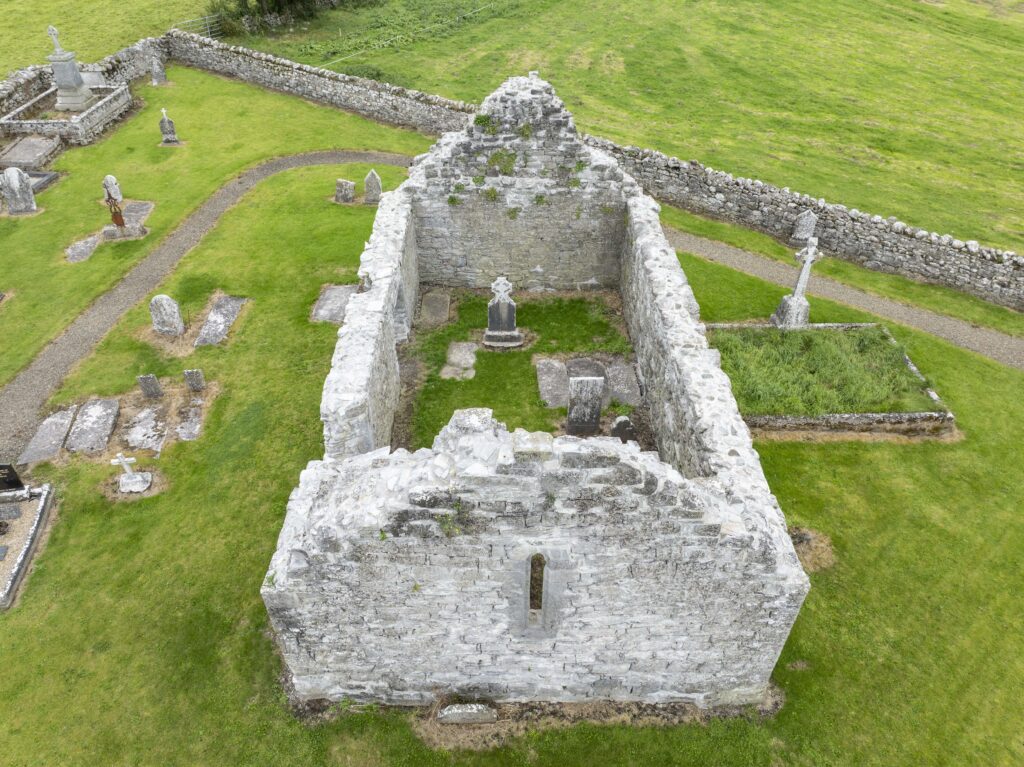
The church is a unicameral structure, which means it has a single chamber and governing body, without separate houses or chambers representing the clergy and laity. It measures approximately 11.3m by 5.5m internally with walls ranging from 800–1000mm in thickness, built using mortared limestone rubble or loose stones, and mortar. It features dressed quoins – corner stones that have been worked or shaped to a specific size and finish for decorative purposes, to contrast with the adjacent wall material.
The church walls stand to approximately 3m in height, with the gables rising above 6m. There is evidence of later re-building, particularly at the western gable.
Appreciate the Detail
As an example of a medieval parish church ruin in Ireland, Killoo has great national and architectural significance. Despite its incomplete state, the church retains features which are typical of medieval churches, and which tell us much about life at the beginning of the second Christian millennium.
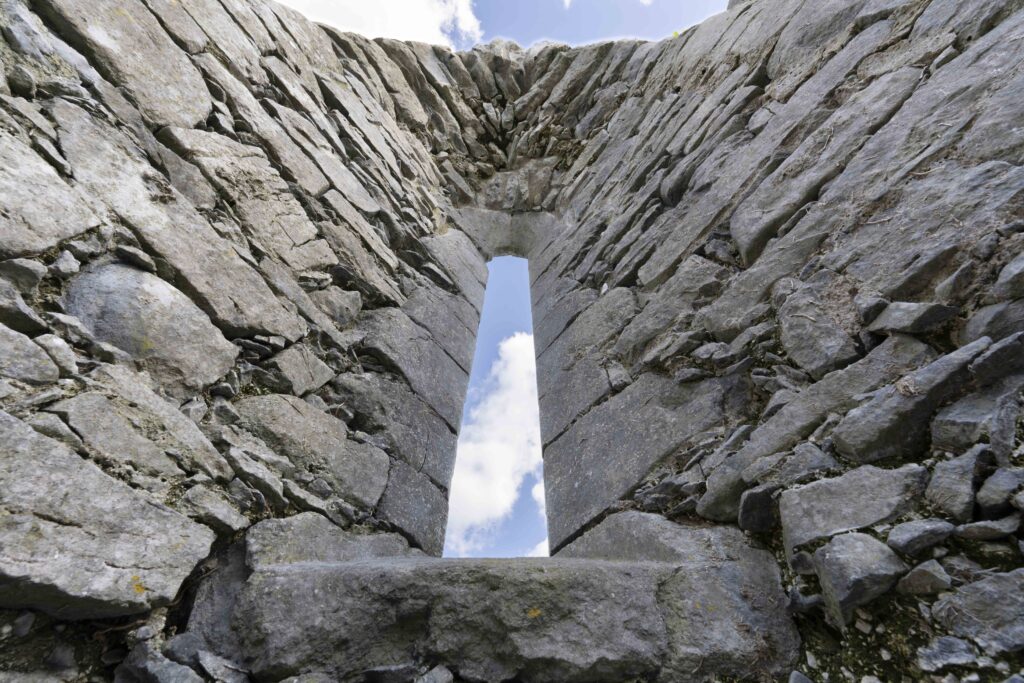
Pointed East Window
This has a chamfered (bevelled or sloping edge) stone surround
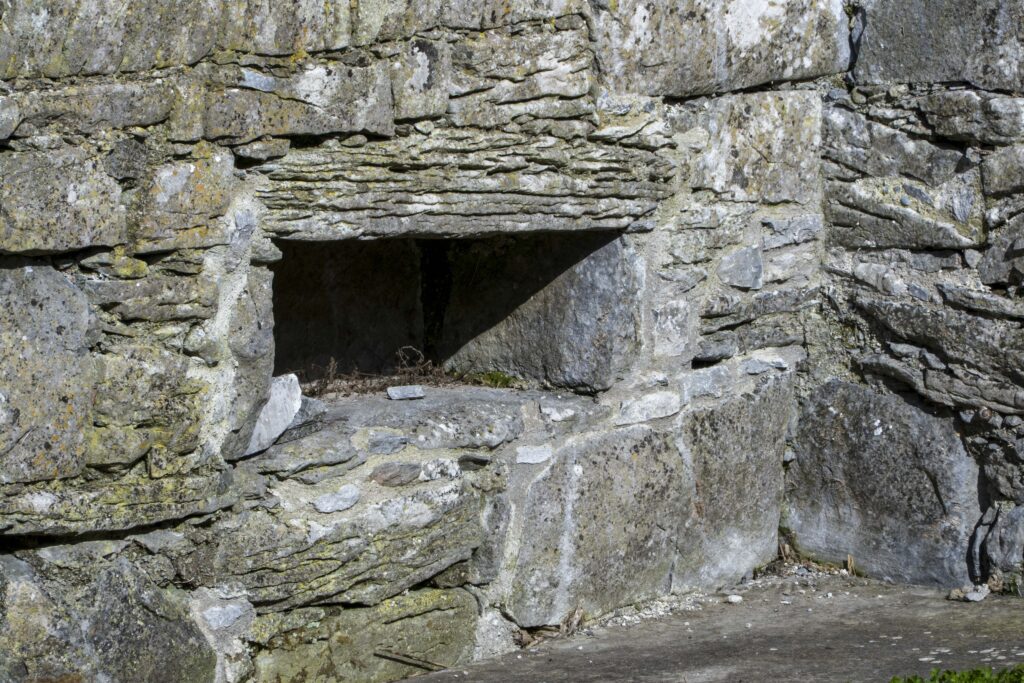
Ambry
This is a recess in the north wall and was used to hold the holy oils for sacraments.
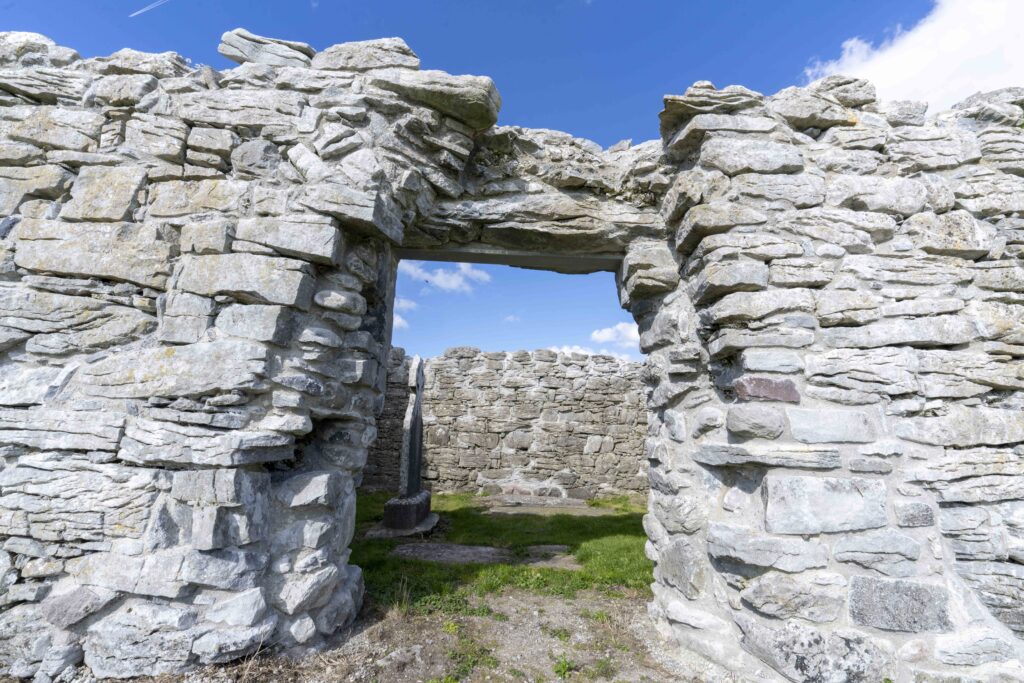
Doorway
The partial remains of a southern doorway features cut limestone details.
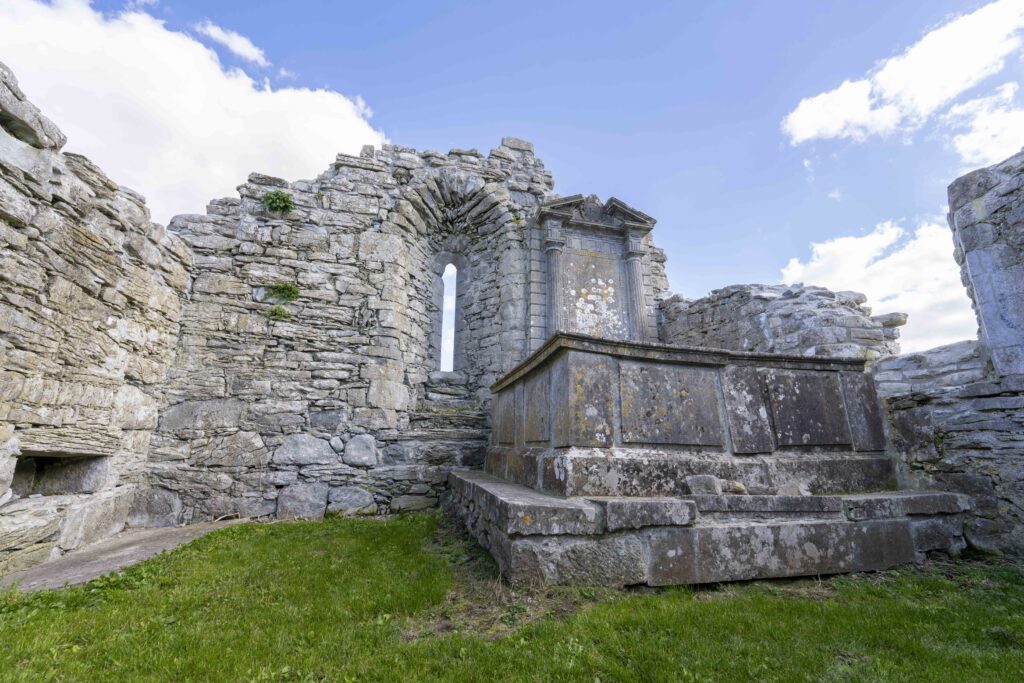
Southern Window
This 12th century window is partially blocked by the later Stamer monument.