
A Place of Peace
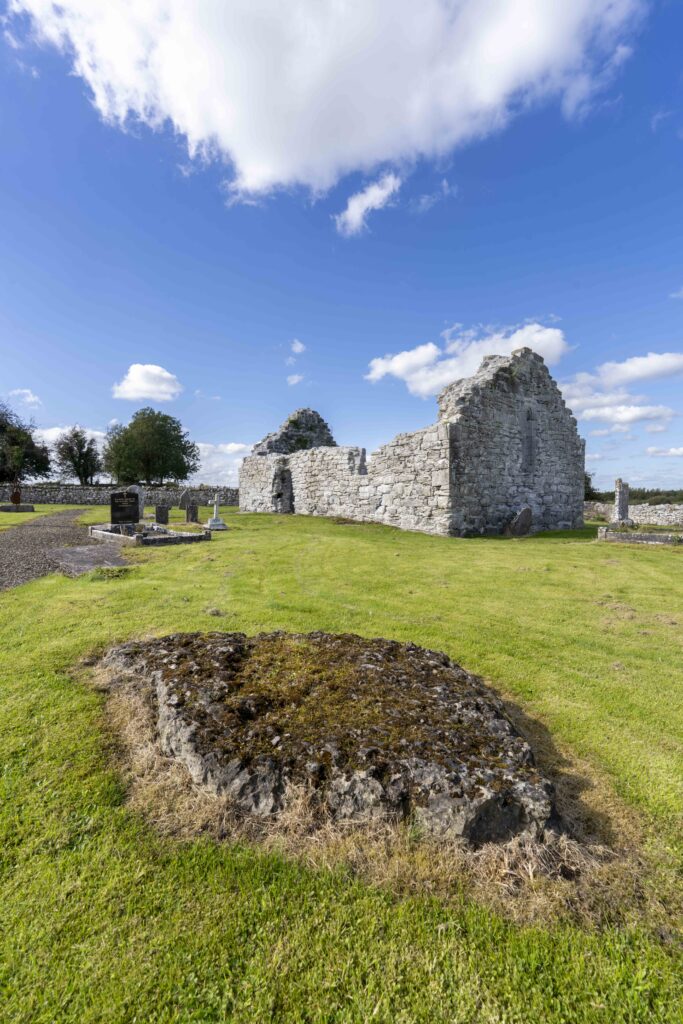
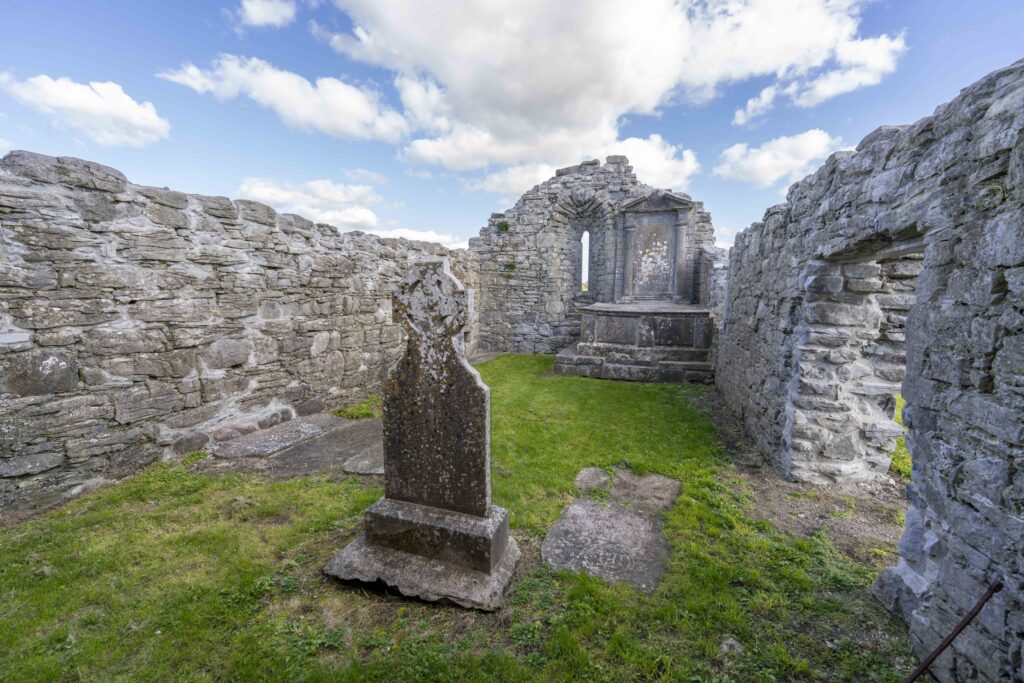
Perhaps the church’s most compelling and telling feature is the surrounding graveyard which continues to be used as a place of burial and reflection. To stand here is to witness evidence of ancient burials and understand a little of the beliefs and customs of the day. As important, is the sense of calm and quiet consideration which so well defines Killoo Church.
Explore carefully and you’ll see that the graveyard includes marked burials dating from 1752 to the present day. Earlier graves are concentrated near the church – in keeping with the belief that proximity to the altar improved one’s chances of salvation.
IMPORTANT FEATURES
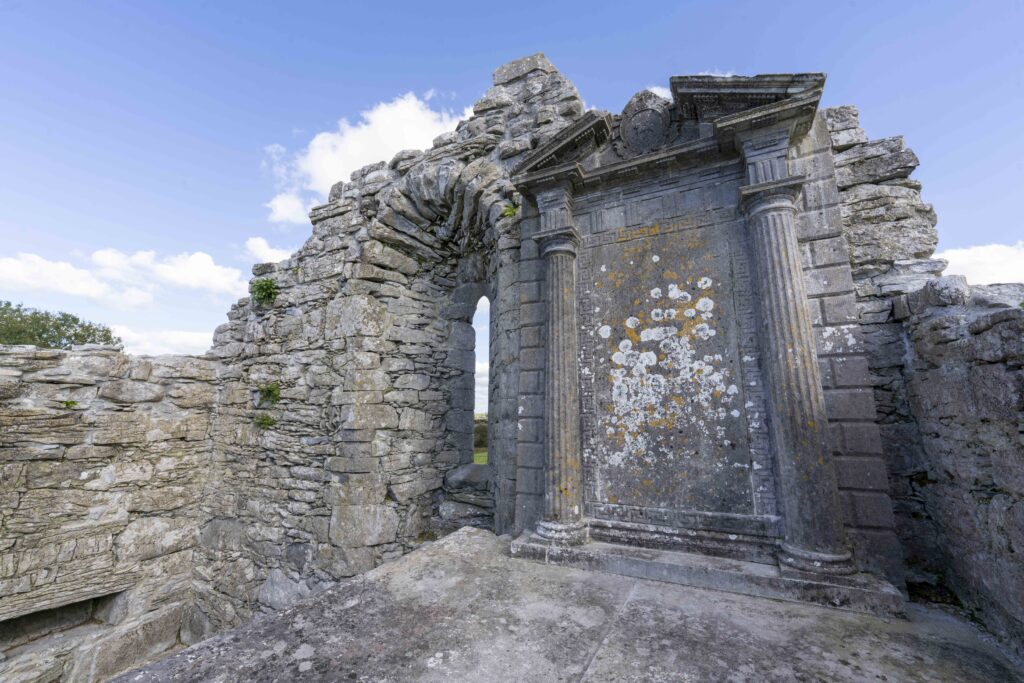
The Stamer Vault
Dating to 1785, this monument is a well-executed example of late 18t century neo-classical stonework and built into the church’s southeast corner. It was erected in July 1785 as a monument to the Stamer family: Col. Henry Stamer and his wife Honora (O Brien) as well as the Duchess of Rodrigo, Elizabeth Stamer. It includes engaged Doric columns, a corniced entablature, and high-quality stone carving. The unrestrained insertion of a burial tomb and monument into a medieval chapel demonstrates the power and status of the family.
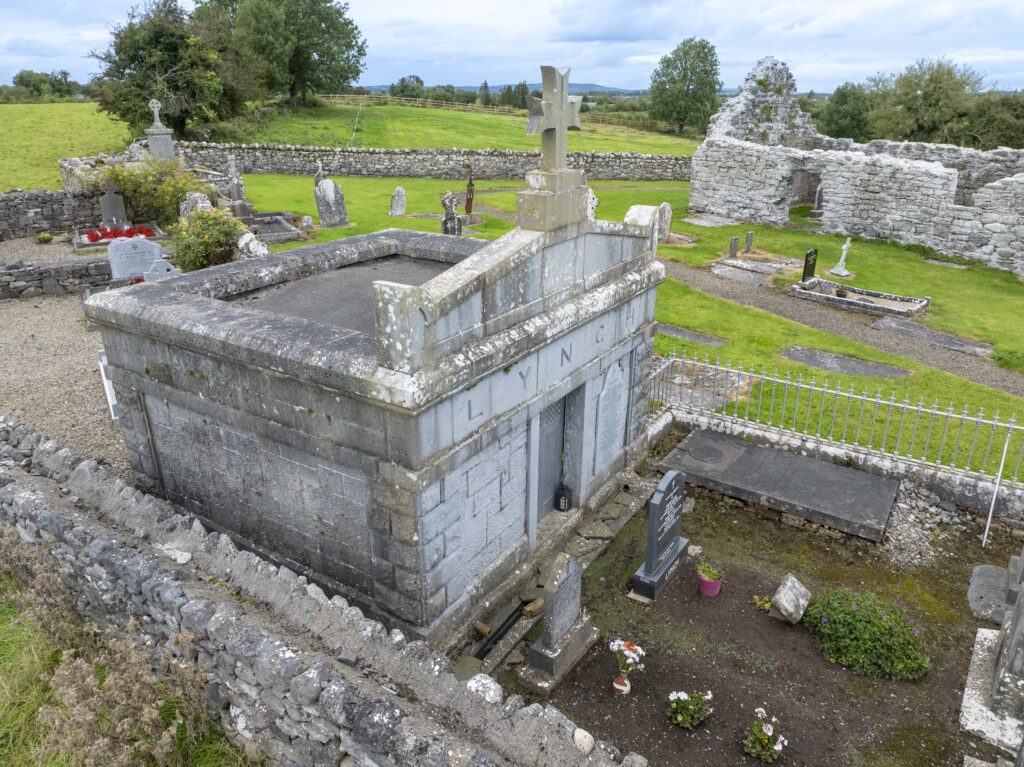
The Lynch Mausoleum
This is a 19th-century ashlar limestone structure with rusticated quoins, carved frieze, and wrought iron gates and railing. This was constructed in 1848. The Lynch family had been expelled from Galway after the Battle of Aughrim in 1691 and settled in this area. Thomas Lynch who fought in that battle, is buried close to the plot. The Maltese Cross on the Tomb links the family to their roots in Galway and to St Nicholas Church and the Crusaders Tomb.
Headstones
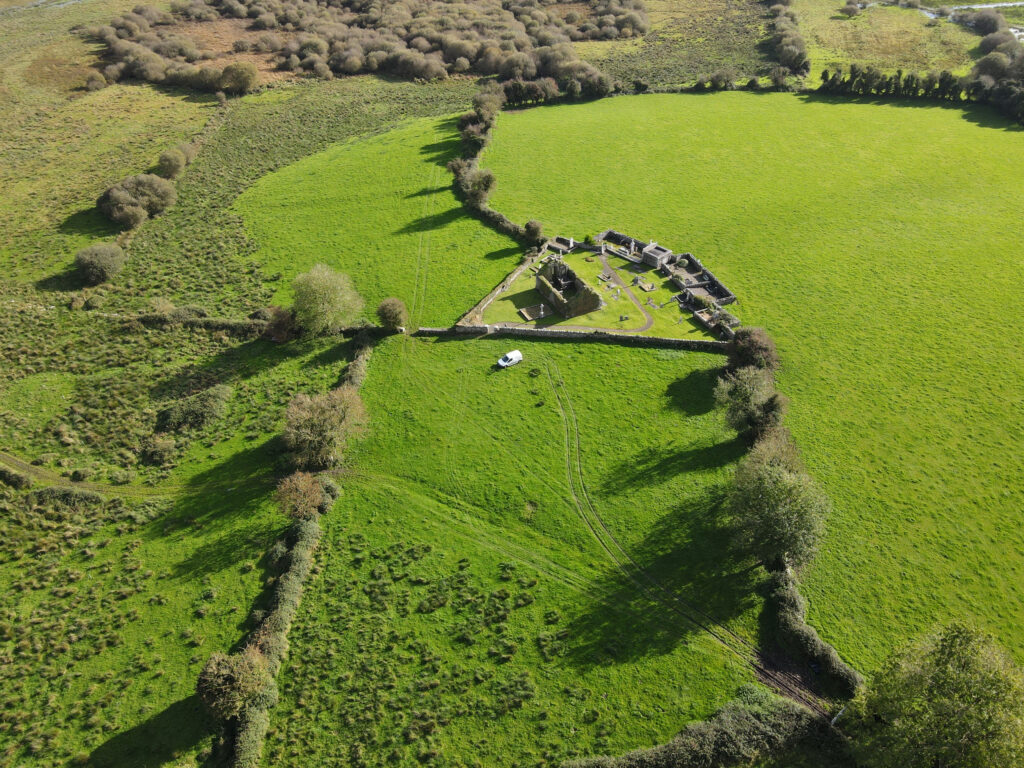
The graveyard includes 19th and 20th century headstones, and a rare cast iron grave marker. The oldest visible record within the church and churchyard is 1752, recording the death of Dan McInerheny (sic) who died on the 3rd day of February 1752 aged 50 years. The graveyard was later expanded beyond the boundaries, as shown in various 19th century maps.