
To experience Killoo Church is to step back a thousand years and picture how life looked in medieval Ireland.
From early pagan worship to Viking invaders and the arrival of the Normans, the Killoo site has given us a direct link with the past, and the more we look, the more we learn about the communities that formed around this ancient site.
The fascinating story of Killoo Church begins long before the 12th century church building you see now ever existed – as far back as circa 500AD. Prominent historian Thomas Johnson Westropp described Killoo as ‘the oldest church in Killaloe diocese’ and we know that Killoo was in continuous use up to the 17th century. While there may be little written evidence about the church’s history, anecdotal references and folklore tell us there was something important about it.
It’s believed that KillooChurch (local spelling Killoo or Killoe) was dedicated to St Lua and was part of a unique relationship between the Deanery of Tradaree and Clare Abbey up to the 16th century.
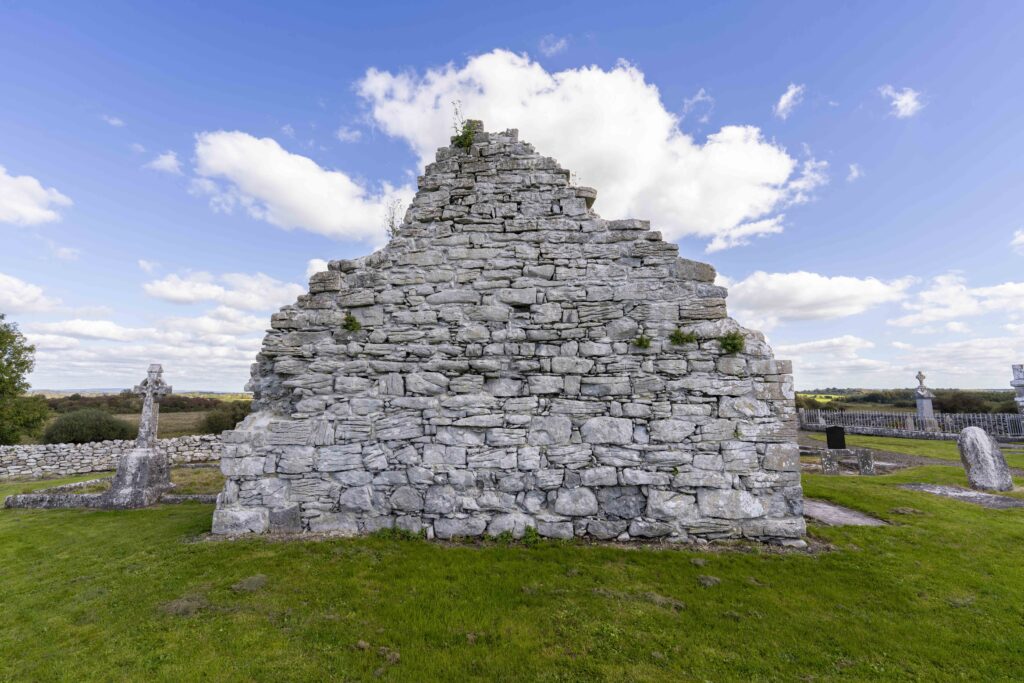
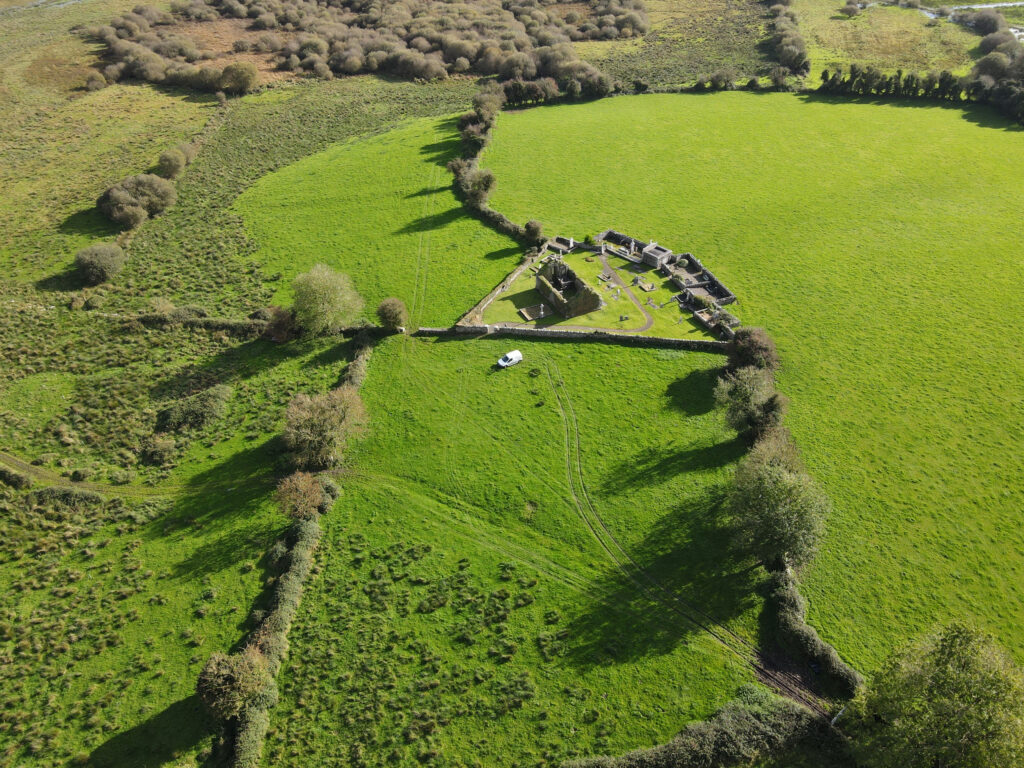
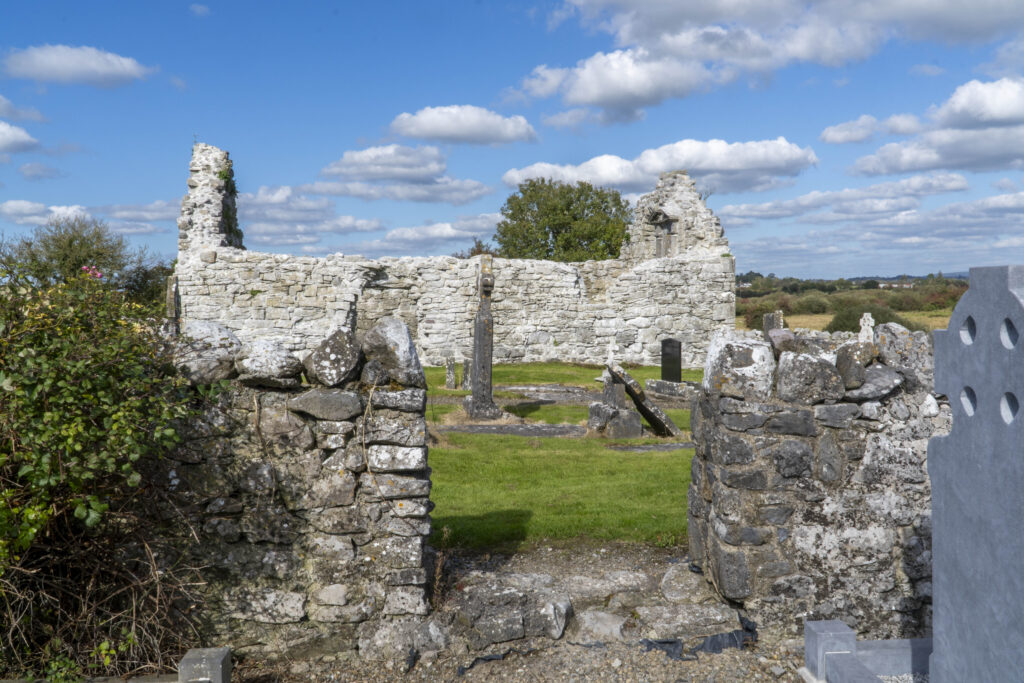
Picture the Beginning
During the pre-Christian period, people followed pagan beliefs and practices. Society was headed up by druids who we believe acted as priests, sorcerers and judges, at a time when the wrath of the gods along with fear and superstition weighed heavily on ordinary folk. Celtic social practices could be brutal, and any wrongdoer would be quickly cast out of the clan, and lost the protection necessary for survival.
Ireland back then was sparsely populated and people settled on dry points in river valleys such as the estuary of the Fergus which gave them access to fresh water. Setting up home on raised ground or drumlins, they built hill forts; these were hostile and dangerous times and fortification against attacks and cattle raids was essential.
A Suggestion of Christianity
While paganism might have defined the early Celtic period, it is believed Christianity was in existence in Ireland at this time. As part of the conservation of Killoo Church, we carried out LIDAR imaging on the site and this revealed a collection of concentric enclosures which are believed to be evidence of an earlier ecclesiastical site during the pre-Christian era, dating back to the 6th century. Back then, Killoo was situated on an island in the Fergus Estuary until the River Fergus was banked in 1790.
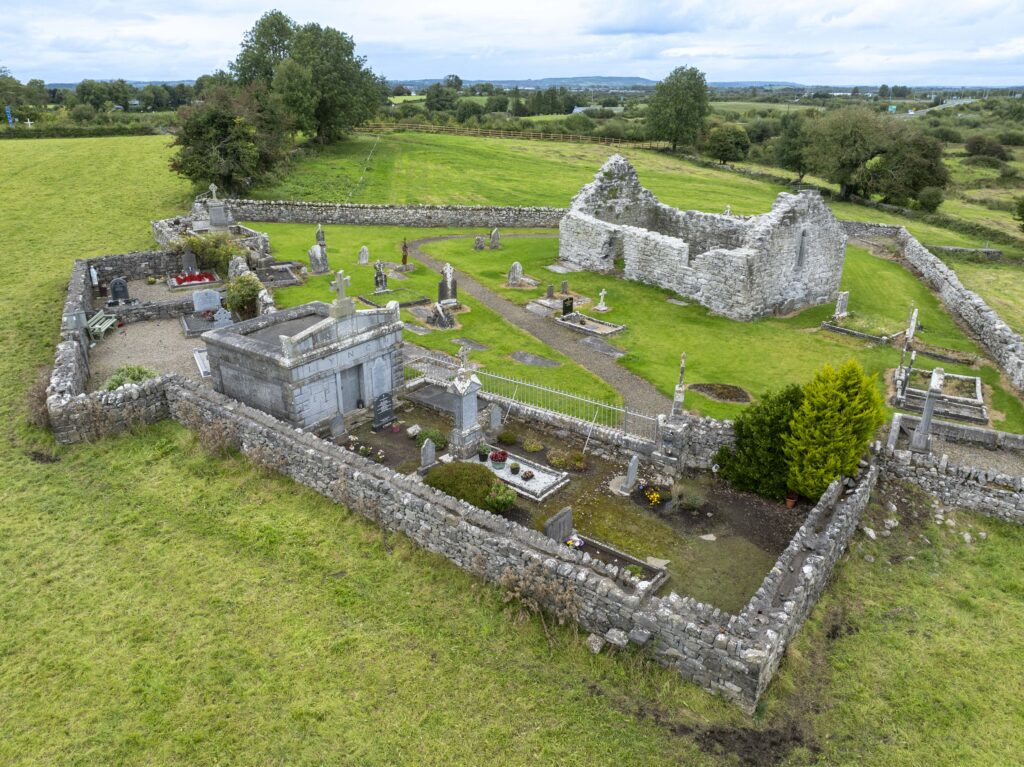
We use archaeological evidence to bring the early Christian world alive. The imagery shows an enclosure around the church site, the innermost and the most sacred circle, with a second smaller enclosure incorporating the churchyard. We can see additional earthworks to the north-east, and a possible entrance way to the south. This tells us that there was a church on the site since the early medieval period. It would likely have been a simple timber structure, which at some point would have been replaced by the stone church you see today.
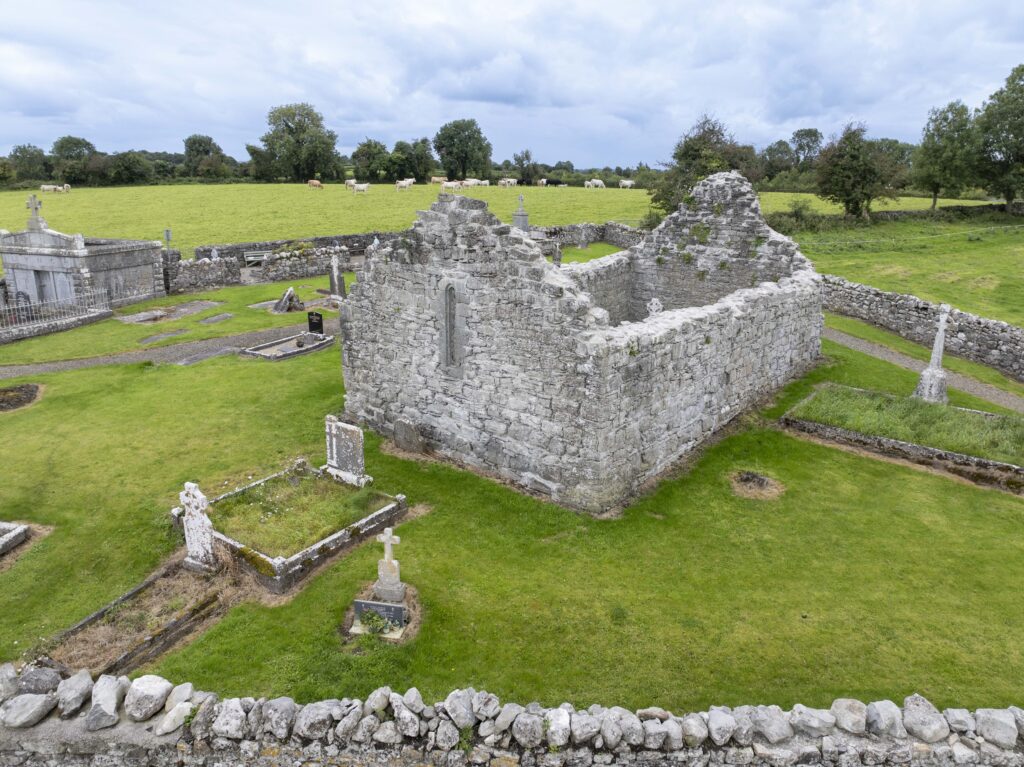
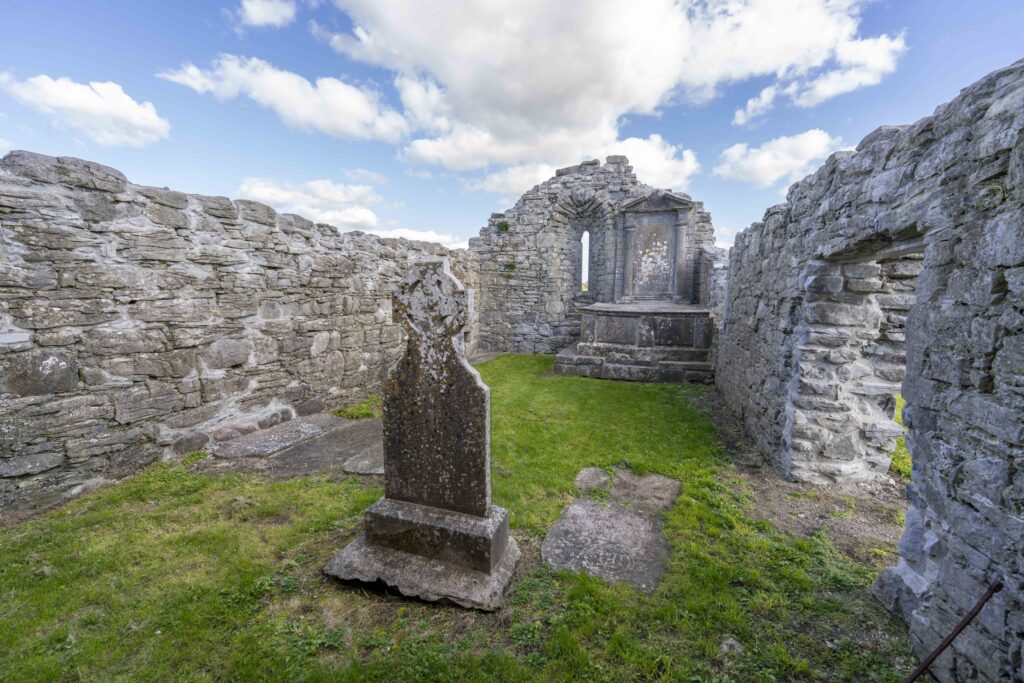
As with ecclesiastical centres of the time, Killoo Church and its graveyard were used as a ritual and religious centre as well as for burials. A religious community would have lived alongside, served by lay families. The site’s elevated position, views over marshland, and proximity to water sources made it a desirable early monastic site.
There are many early ecclesiastical sites in Ireland dating to the early medieval period, from 450 AD to 1100 AD. These range from the great monastic centres such as Clonmacnoise in County Offaly, and Glendalough in County Wicklow – to smaller isolated hermitages. Some were minor monasteries while others were small church sites with priests who served a lay community. The enclosures were constructed from earthen banks and ditches or made of stone. Bigger ecclesiastical sites could have included several churches. Other religious monuments would have featured too – such as round towers, bullaun stones, high crosses, sundials, cross-inscribed slabs, stone crosses and holy wells.
‘As the Christian message spread, society became much more peaceful. The introduction of cillíns (small church or cell) led to Christian worship and the spread of the Christian ethos of love thy neighbour and works of charity. People began to build ring forts and earthen enclosures in their thousands.’
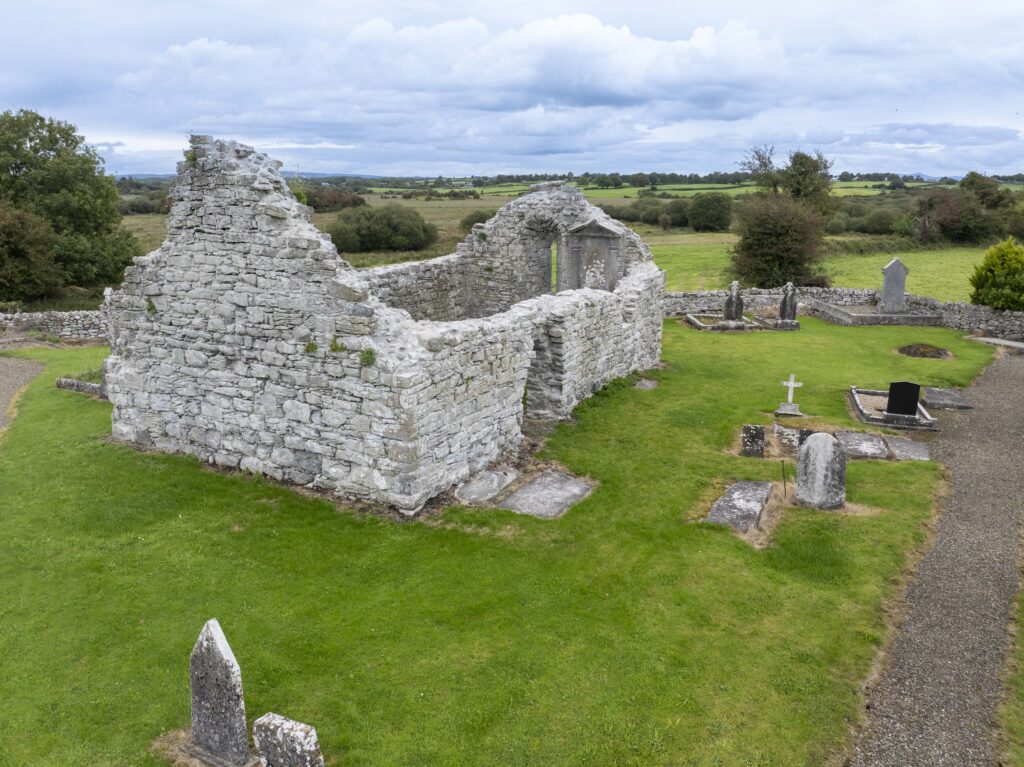
Killoo Church at its Prime
From the 5th century on, Ireland embraced Christianity and Gaelic Irish monasteries became important centres of learning. Against this backdrop and constructed of limestone, Killoo Church was built circa 1100 AD and developed as a small monastic self-sufficient community which may have been part of the Ceile Dé movement.
As part of the Diocese of Killaloe, Killoo Church would have been at its height over the course of the 12th century. The church was built on the interface of land under the powerful McNamara and O’Brien families: frontier country between Munster and Connacht. The Papal Taxation valuation of 1302 AD tells us that Killoo was an independent parish.
Churches like Killoo, with an enclosed churchyard, were the core of the medieval community. There were at least 80 similar religious centres in County Clare, and Killoo Church is probably the best preserved of all. This formed the basis of the beginning of the parish structure.
We believe that Killoo Church may have been part of the tuath-church system (tuath meaning ‘people,’ ‘community’ or ‘laity’) of early medieval Ireland and later aligned with the Anglo-Norman manorial parish structure.
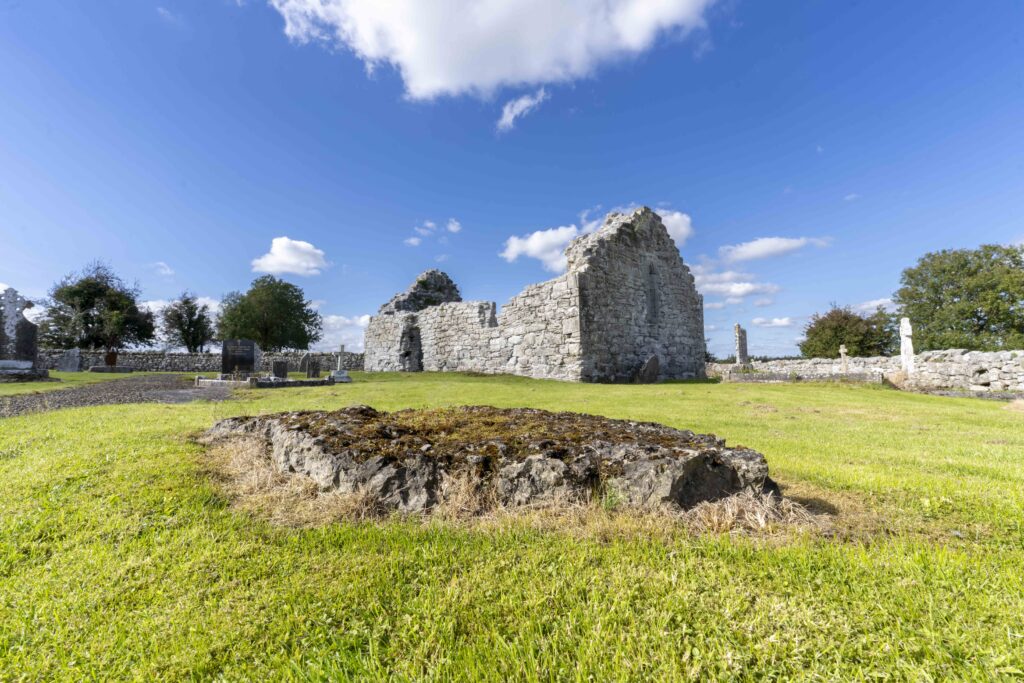
One Day in 1100
As you stand at the site of Killoo Church, picture what life was like centuries ago…
Each day is like any other, as the people of the small community at Killoo go about their simple life of prayer, rituals and farming. The location of Killoo Church makes it extremely important as it is the first crossing point of the river. The river feeds this community – an early highway carrying people and goods. Killoo is at the centre of trade for mid-Clare, and the port is alive with boats arriving from Limerick to Clarecastle and Kilrush. There are some boarding houses, with pigskin-clad windows, offering a weary traveller a bed and a drink.
We hear the language of the people – a type of medieval Irish distinct from today’s form of Gaelic. The sense of ‘being Irish’ does not exist yet; these people are simply defined by their family or clan. They are self-sufficient, living off the land and fishing, and they have picked their sites well to farm grain, pork, chickens and cows for milk.
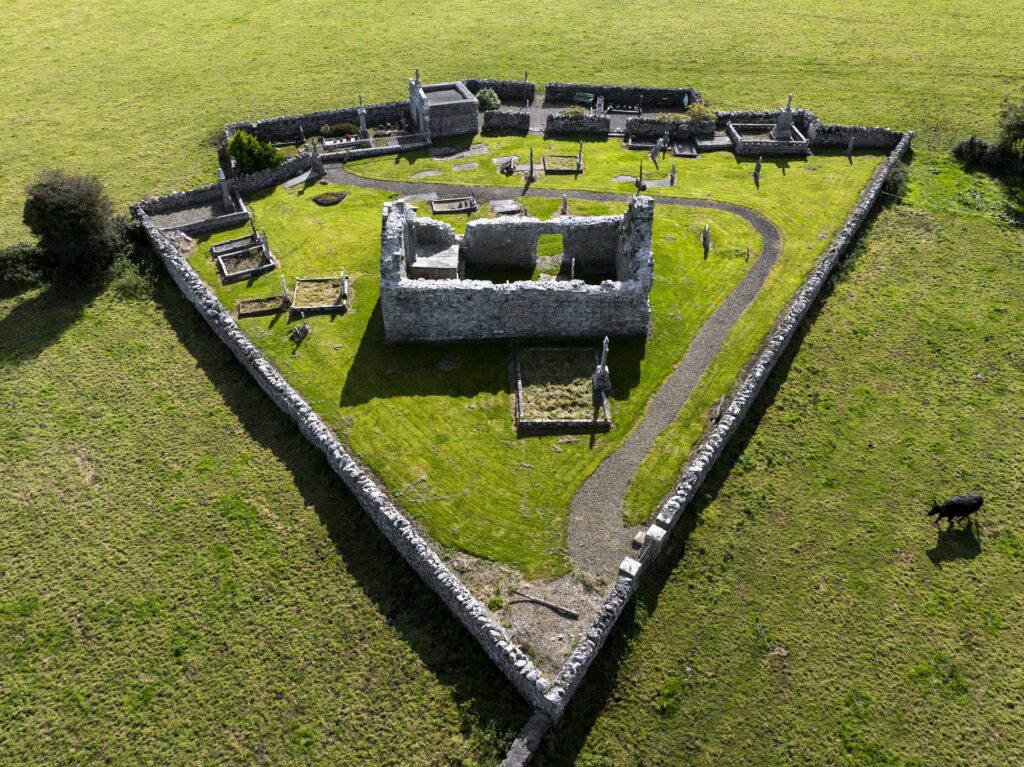
Still, life is not easy and there are many children going without food. One can understand how small in stature the people are and how they suffer with ill-health. People live on average to age 30 or 40, and it is common for women to die in childbirth. Each family has up to ten or twelve children. Those who survive have school lessons in the church, learning prayer and the basic sums they need to barter.
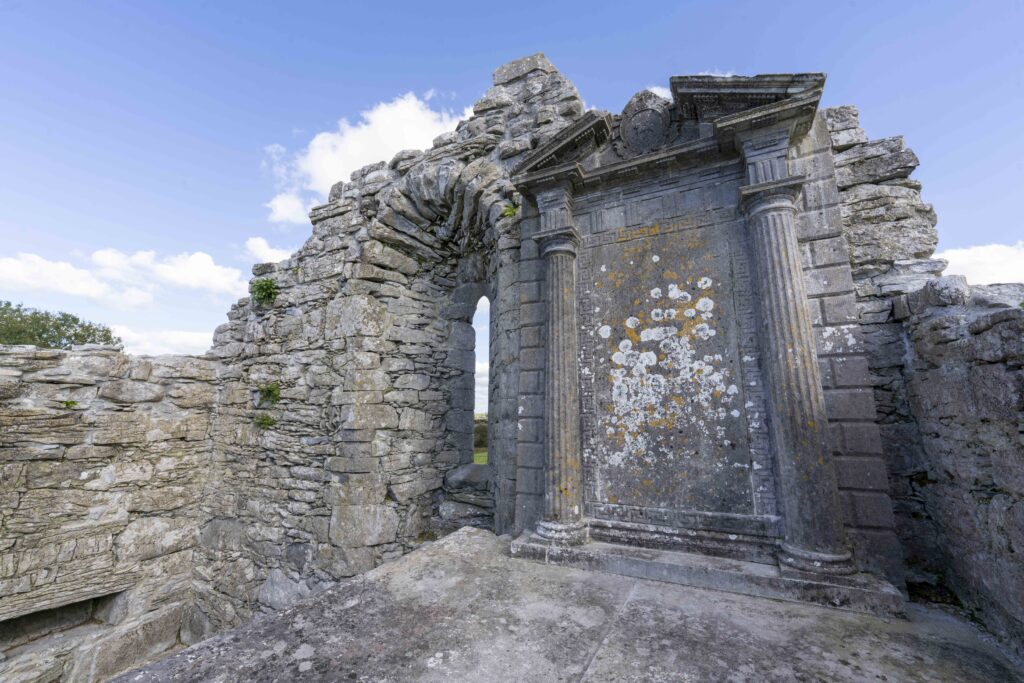
The church is testament to the level of skill of the locals; they rely on some form of technology to lift and cut the stone. The church is the centre of religious and civic society and the priest lives within this community, in the church attic. Next to the church is a glebe – a small piece of land with grazing and tillage for the priest. His day is busy as he celebrates mass in Latin and also acts as one of the community judges. But the church is also a community centre and a public house, where people socialise and relax, and it offers support to the needy and sick. It is used for secular gatherings and hosts events like guild meetings and is also a base for craft working and artistic production including metal working, bone and antler working, manuscript production and illumination. One can visualise how the church is also used to safely store the community’s essential threshing and grain.
At night we see the villagers sharing stories and fables – a legacy of their strong pagan past, as is the placement of their windows which face the rising sun.
The 12th Century Winds of Change
The 12th centuries saw a widespread movement in Western Europe, including Ireland, aimed at reforming the Church. The Irish Church forged links with the English Church and Roman Church, and emphasised papal authority, clerical celibacy, and liturgical uniformity. At the Council of Cashel in 1172 the Irish bishops agreed to apply the customs of the English church to Ireland, introducing mainstream European standards by constructing dioceses which were synchronised with political order. Driven by reformers like Gilbert of Limerick, these changes coincided with the Anglo-Norman invasion and were influenced by the Gregorian Reforms which sought to strengthen the authority of the papacy and standardize church practices. Over time, the parish of Killoo came under the ambit of the monastic parish of Clareabbey.
The reform of the Irish Church in the 12th and 13th century brought significant changes with the establishment of Abbeys in Clare Abbey and Killone in 1185, Ennis in 1214 and Quin in 1433. These continental-style Abbeys would dominate the local communities with enhanced pastoral care. This inevitably resulted in the decline of centres like Killoo.